
We sat down with Ricky Sharma, Development Director at JT Lifestyle homes, to discuss the most pressing issues facing the industry and how JTLH are navigating them whilst also pushing construction forward in a meaningful way.
As prices surge, laws shift and the construction landscape continues its perpetual and dynamic transformation with the introduction of new technologies and practices, new challenges present themselves to prospective and current property developers. In this article we cover 5 of these issues and delve into how they are impacting the property development landscape and how innovation may be used to combat them.
1. Financial Uncertainty
Uncertain markets have a universal effect on a variety of industries, yet construction and property development find themselves particularly sensitive to such shifts due to their reliance on complex and varied supply chains. Increased 10-year gilt rates (last week’s high of 5.527% being the highest since 2007) have invariably affected investor confidence which, in conjunction with increased interest and mortgage rates, has supplemented the struggle that the market is facing. As banks and lending entities tighten their pockets, many developers are finding that funding their projects is becoming increasingly difficult.
The contemporary cost of living crisis has meant that economic uncertainty is being felt by all stakeholders, not the least by those looking to purchase property. The Catch 22 of developers spending more in order to build and therefore price higher whilst prospective buyers find securing the necessary funds more challenging is being felt across the whole industry. We find ourselves in a buyer’s market, one where buyers have more pressing matters to deal with than purchasing a new house.
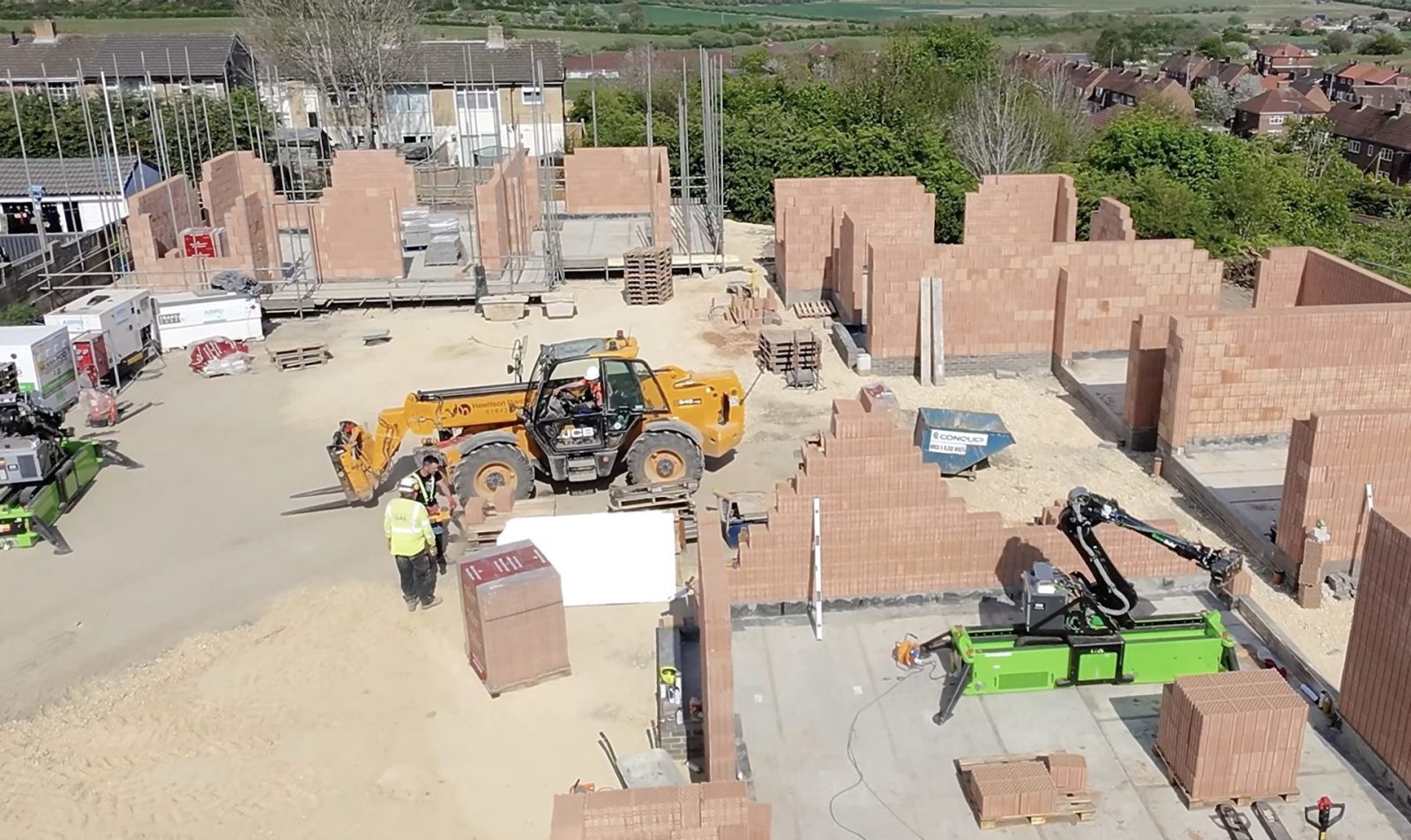
JTLH cannot completely ease financial doubts, or rectify the current complexities of the sales market. However, through targeted innovation that seeks to address real problems and streamline processes, we believe that certain aspects of construction can be made more efficient, sustainable, consistent, and most importantly, affordable. The WLTR walling solution seeks to advance a substantial and fundamental part of the construction process, creating a bricklaying solution that is faster and less prone to error and whose cost-saving benefits can be felt by developers, stakeholders and property buyers alike.
2. Legislative Changes
Recent changes in legislature have created a rapidly shifting environment for developers as new regulations require alterations in frameworks, practices and supply chains. Navigating legislation such as the Renters Rights act has necessitated that developers shift their business models as tenancy lengths become less predictable and arrangements become more complex. Ensuring compliance can incur additional costs which can also create additional strain.
Uncertain cashflows arising as a result of new legislation is a reality that developers must face, but a commitment to continued quality in construction and a reallocation of priorities and resources to better suit this new landscape in paramount to continued success. As the environment changes, JTLH is endeavouring to change with it, placing innovation, flexibility and versatility at the forefront of its operations.
3. Rising and Volatile Energy Costs
Fuel, electricity and water amongst other resources remain vital parts of any project and their cost and availability invariably factor into the success of a project. With fuel prices reaching £2 per litre of diesel recently, the price of transporting materials has increased markedly for most developers. As geopolitical and economic factors continue to introduce volatility into the market, planning around energy costs will continue to be an unavoidable challenge for many.
A focus on renewable energy and a reduced reliance on fuels is the route many are taking to combat this, and JTLH’s innovative solutions endeavour to incorporate sustainability as a core component. WLTR’s walling capability is powered by a staggeringly low 1.4 kw of electricity draw and a specialised adhesive that does not require water. Coupled with an increased reliability due to repeatable programming, the solution uses less energy and decreases the likelihood of potentially wasteful remedial work.
4. Increasing Material Costs
Recent studies have shown that rising UK building prices have accelerated in 2026, with the “all work” material price index being 6.4% higher in August than a year earlier. Increased transportation costs are compounded by the price of materials themselves being higher, further increasing total build costs and requiring more acute management of budgets by a team’s QS. A price that is steadily increasing also provides additional uncertainty as developers must hedge their bets on whether prices will continue to rise in this manner and plan accordingly.
Whilst the majority of materials are affected by this increase, developing and utilising resources of proven quality and sustainability can mitigate the impact of price hikes. The Porotherm PLS140 block is the preferred option for JTLH’s walling solution and is manufactured for insulation, rigidity and reusability. Each block has its own insulation, meaning less is spent on external solutions, and can be ground into hardstanding that can be used on site, further limiting wastage. With costs going up, it is more important than ever to find solutions that are worth the money.
5. Lack of Qualified Personnel
A key issue that many developers face is a shortage in qualified professionals capable of meeting the demands of modern construction. This has come as a result of many employers struggling to take on more apprentices because of administrative burdens and uncertain workloads, partially caused by aforementioned issues. Whilst interest in construction has not necessarily waned, these barriers have prevented the increase in qualified professionals required to meet demand. This question of meeting demand is ultimateley where developers are focused, and CITB estimates that construction would need around 47,000 workers a year by 2029 to keep up.
JTLH believes in fostering interest and creating opportunities for the next generation of professionals through its NVQ scheme. Training and empowering students with skills that will actively benefit the industry and create new avenues for growth is an aspect of innovation that we are actively involved in.
Property Development and Construction has always been a dynamic landscape with constantly shifting expectations, priorities and innovations pushing the industry forward. As we move into the future, JTLH are eager to place innovation and strong relationships with its partners and clients at the forefront of its operations to foster meaningful change and stay on top of the challenges that arise.
Interested in working with us and seeing where our expertise, experience and innovation can take your projects? Contact us here!